This past weekend I went out to Castel Sant'Angelo, St. Peter's Basilica, the Pantheon, Piazza Navona, Trevi Fountain, and the Capitoline Museums. I ended up going to Castel Sant'Angelo twice... Primarily because I adore it, but also because my friends needed a tour guide of sorts. Yes, when I end up in places that I have historical or art historical information on I turn into tour guide barbie.
I had all of the dirt on Castel Sant'Angelo (archeology pun! don't judge me) and so I told my friends of the tumultuous history of the place. It was originally built as the mausoleum for Emperor Hadrian, who was one of the 'Good Emperors' and held his ashes and the ashes of his wife. But it was sacked by the Visigoths in the 410 and the cremation urns were smashed and the ashes scattered.
After a long period of disuse and having its marble used in other building projects the now stripped down mausoleum would be put back into use by Pope Nicholas III. He turned it into a fortress for his Holiness to use during times of trouble. It received it's name from a sculpture of the archangel Michael by Rafaello da Montelupo - which was later replaced by the one that now stands atop the keep by Peter Anton ver Verschaffelt. Pope Nicholas also built il Passetto di Borgo - a secret passageway leading directly from Castel Sant'Angelo to the papal palace within the Vatican walls. Castel Sant'Angelo was a favorite of Pope Alexander VI (Rodrigo) Borgia in the 15th century. I am fascinated by the Borgias. If you have any free time and a love for history and scheming watch Showtime's The Borgias. It's wonderful and Jeffery Irons plays Pope Alexander VI.
The castle also functioned as a prison for the papal state. From the upper levels one could see how it was utilized as the Pope's lavish escape from prying eyes - especially when he was having a tryst with Julia Farnese. But as you go lower you can see that it really served more militaristic purposes. There are murder holes everywhere, turrets for the cannon (which at the time were a new weapon in europe), and ballistae. In a time when Italy was not united and France was marching through the country to take its 'rightful' claim over the Kingdom of Naples after having sacked a few cities on its way down and the fanatic Savonarola was leading a religious and social movement banning displays of wealth and having a Bonfire of the Vanities (which burnt some amazing Florentine paintings of the Renaissance) Rome needed to be able to defend itself - or at least the Pope. It definitely served its purpose.
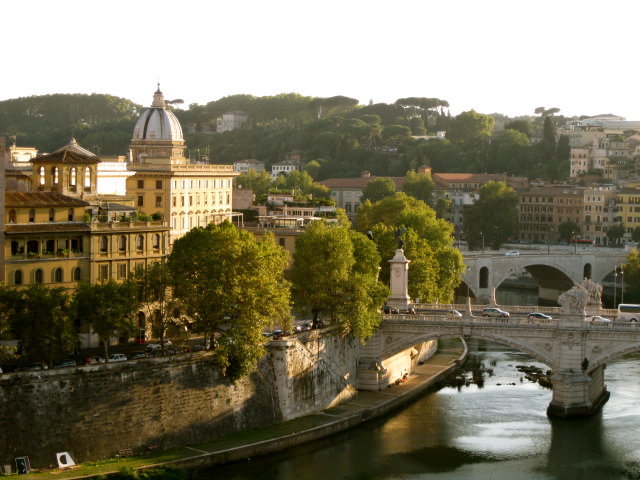
Later on the Ponte Sant'Angelo (the bridge that leads to the castle) was decorated with angels designed by Bernini. Two of them are said to have been sculpted only by his hands, but unfortunately we don't know which two. These angels are magnificently beautiful and provide a divine experience for any walking towards the castle.
Alright, here is where I confess to being a huge nerd... So I got hooked on Assassin's Creed II when I saw my younger brother playing it. I had never realized that it took place in Renaissance Italy, and even the cities were laid out exactly like they are in real life. I could find my way around cities I had previously visited easily. And then you get to interact with famous historical figures, for example Leonardo da Vinci is your buddy who occasionally hooks you up with his 'inventions' like hidden handguns and nifty gliders. I just really appreciate the fact that there are people out there who are stealthily educating the children of the video game era. You meet Borgias, Medicis, and even Machiavelli. Plus, the free-running mode is insane - it allows you to scale buildings and leap rooftops like a renaissance spiderman. So, as I'm walking around Castel Sant'Angelo for the first time I am having an incredible moment of dejá vu. I know where I am.... I've been here before... I've scaled these walls... I tried to assassinate Cesare and Lucrezia Borgia here... Wait. What? Oh yeah, not real life. Just a ridiculously architecturally accurate game.
So instead of forcing more historical knowledge on you than you ever wanted, I will instead post photos with small captions for your sanity and mine.
 |
| A model of Hadrian's mausoleum. |
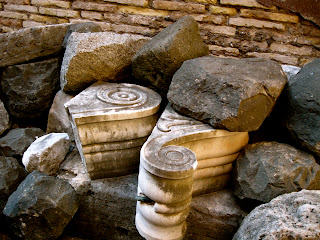 |
| Destruction wrought by time. |
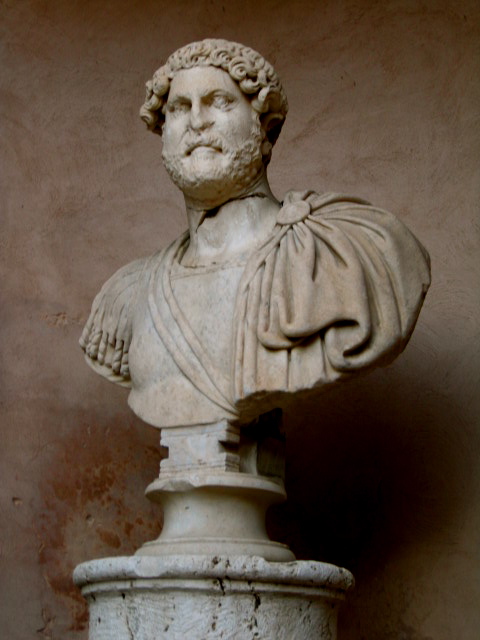 |
| A bust of the Emperor Hadrian. |
 |
| A defaced bust... but I swear it's Voldemort. |
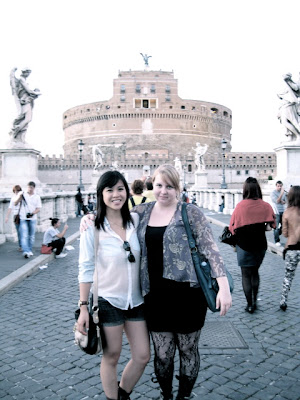 |
| Me and Stephanie on the Ponte Sant'Angelo. |
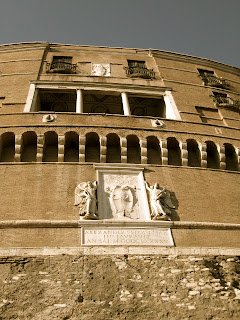 |
| Loggia of Pope Julius II over inscription by Pope Alexander VI. |
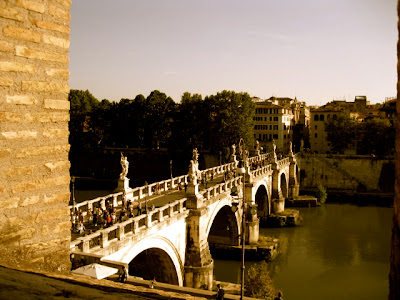 |
| Ponte San'tAngelo |
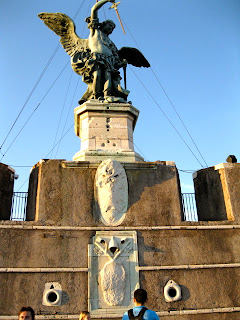 |
| Saint Michael the Archangel by Verschaffelt |
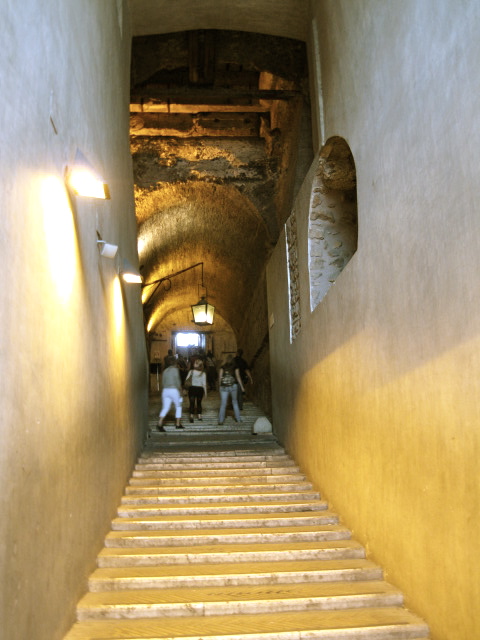 |
| Climbing up inside the castle. |
 |
An area of original flooring.
|
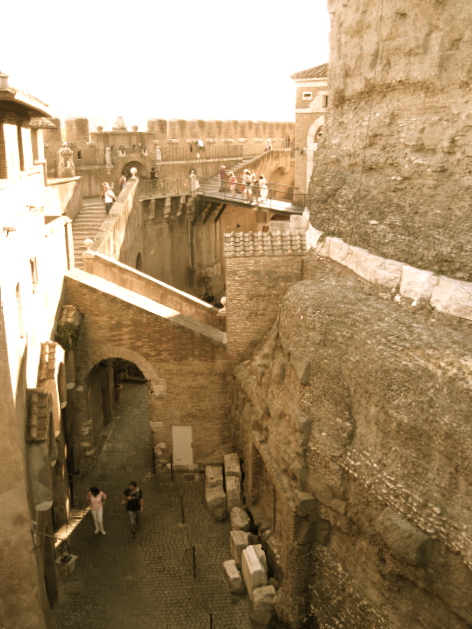 |
| Inside the walls. |
 |
| A courtyard with the original statue of St. Michael the Archangel |
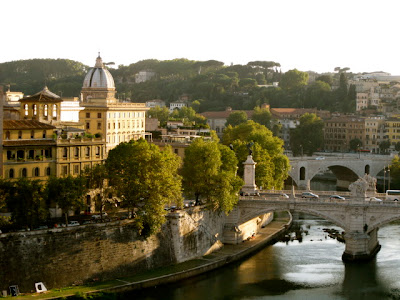 |
| Beautiful view of my favorite city. |
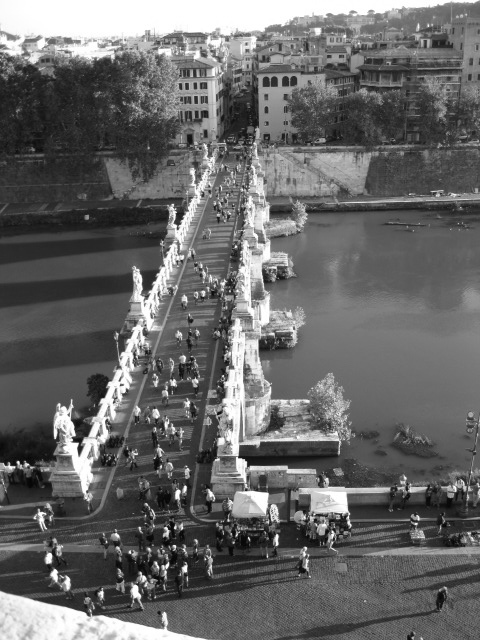 |
| Ponte Sant'Angelo |
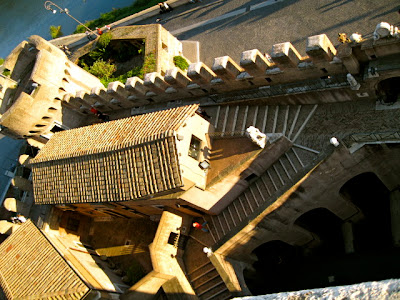 |
| Atop the walls |
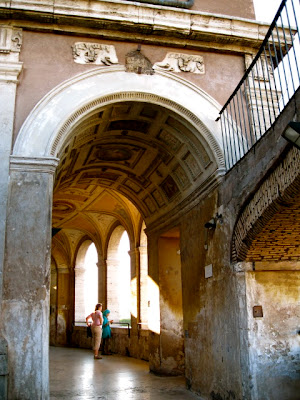 |
| The lavish upper apartments. |
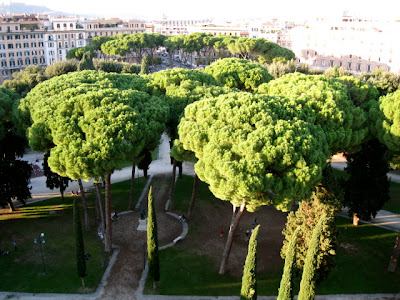 |
| The park below. |
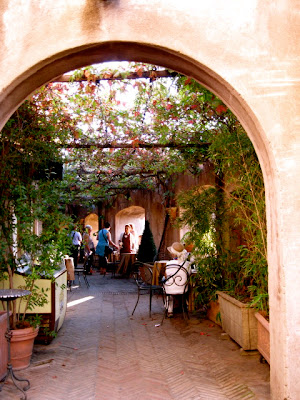 |
| There's even a café |
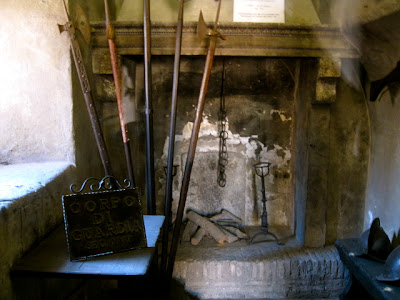 |
| Guard supply room. |
 |
| Really high up murder hole. |
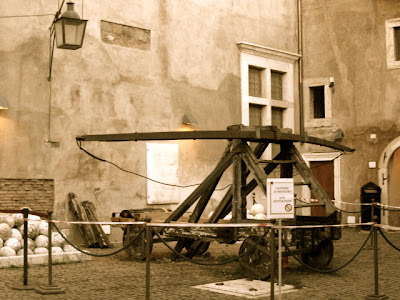 |
| Ballista |
 |
| Roma! |
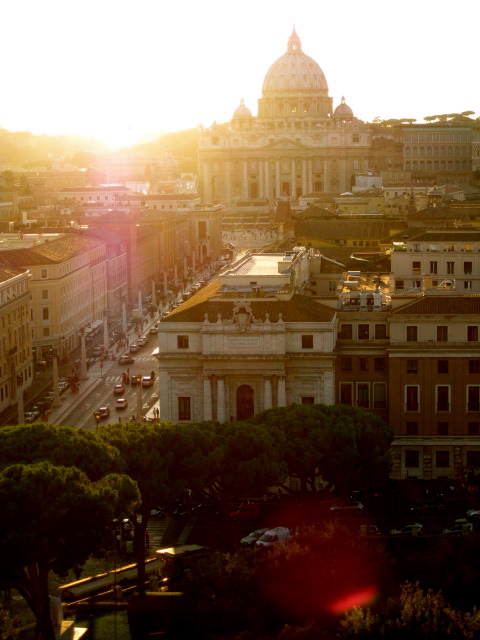 |
| The view of St. Peter's from the Castel |
 |
| Me with a killer view of Rome. |
The next night Rome had a bunch of museums open for free between 7pm and 2 am. If that's not my dream come true I don't know what is. The best part is that only the locals seemed to get the message - my professor told us about it - and there weren't a lot of tourists. It was no refreshing. So I went to the Capitoline Museums and had the time of my life. You couldn't take pictures inside, but it was incredible. If you get the chance, GO!
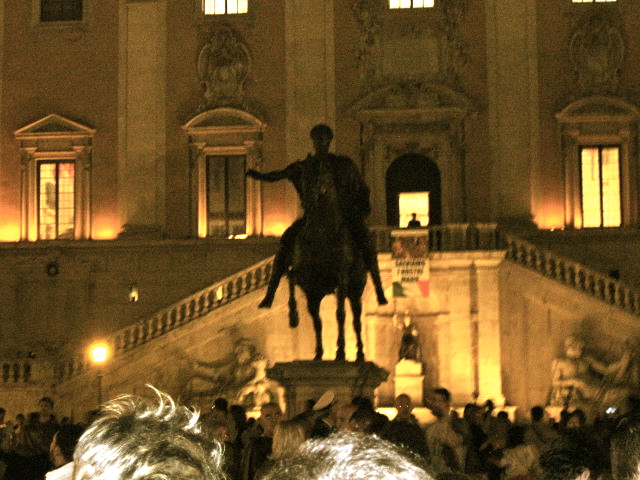
I saw the equine statue of Marcus Aurelius. This statue was mistaken for emperor Constantine - who converted to Christianity on his deathbed and legalized it in 313 with the Edict of Milan- so it was preserved as a person of value to the Christians, unlike most other bronze statues of the time which were melted down for ammo. Later, thanks to Roman realistic portraiture, it was discovered to actually be a statue of emperor Marcus Aurelius, who was one of Rome's good emperors (he was the dying emperor in the Russell Crowe Gladiator film who was succeeded by his jerk son Commodus). This statue used to be in front of the Lateran Palace - the Pope's palace before 1420 - until it was moved to the center of the Capitoline Hill in the area designed by Michelangelo. Now it is replaced by a copy and the original is inside the museum to protect it from the elements.
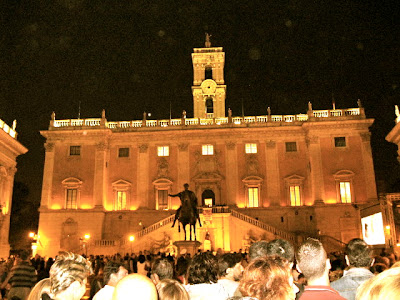 |
| Capitoline Hill. Packed with Italians. |
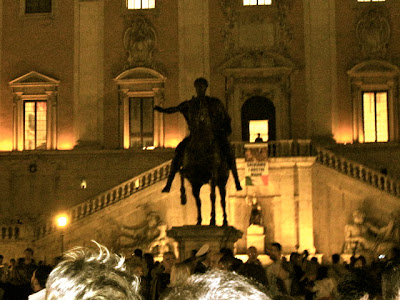 |
| Equine statue of Emperor Marcus Aurelius. |